
Education
General
General
Student Life
Education
Culture and Society
Grad student Megan Kenline wins national honor for essay
Midwestern State University grad student Megan Kenline is passionate about helping others in any way she can. And her desire to do so is not built on something theoretical; she has developed action plans based on experience.
Kenline’s ability to move beyond the abstract gave her a real purpose in her educational mission.
That ability to convey her experiences also led to the American Counseling Association selecting Kenline as the recipient of the Future School Counselor Essay Competition Second Prize for her work titled “Future School Counselor.” The prize came with a $500 honorarium and a chance to be recognized at the 2026 ACA Conference and Expo (April 9-11) in Columbus, Ohio.
Kenline is a second-grade teacher at Founders Classical Academy/ ResponsiveEd in Lewisville, Texas. She earned her bachelor’s degree from Midwestern State University in Interdisciplinary Studies in 2008.
Kenline has taught for 12 years. But she said a personal “turning point” came during an unexpected stay in a children’s hospital when her son had appendicitis. “While we were there, I witnessed how limited mental health supports can be in real time for children and the adults trying to care for them. That moment stayed with me. It made the need feel very real—not abstract—and it reinforced what I already see in schools: families often lack the tools, language, or access to help, and kids carry more than we realize.’
And she finished with “My goal as a future school counselor is to meet students where they are, help them manage the pressures they face, and create an environment where every child, from kindergarten through senior year, feels capable, supported, and ready to succeed.”
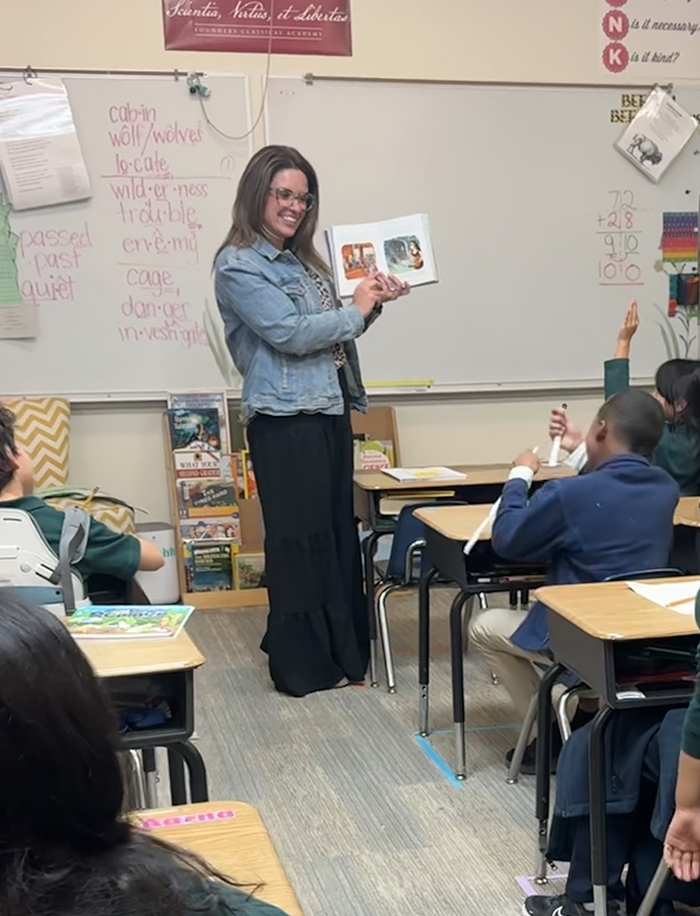
Megan Kenline is a second-grade teacher at Founders Classical Academy/ ResponsiveEd in Lewisville, Texas. She earned her bachelor’s degree from Midwestern State University in Interdisciplinary Studies in 2008.
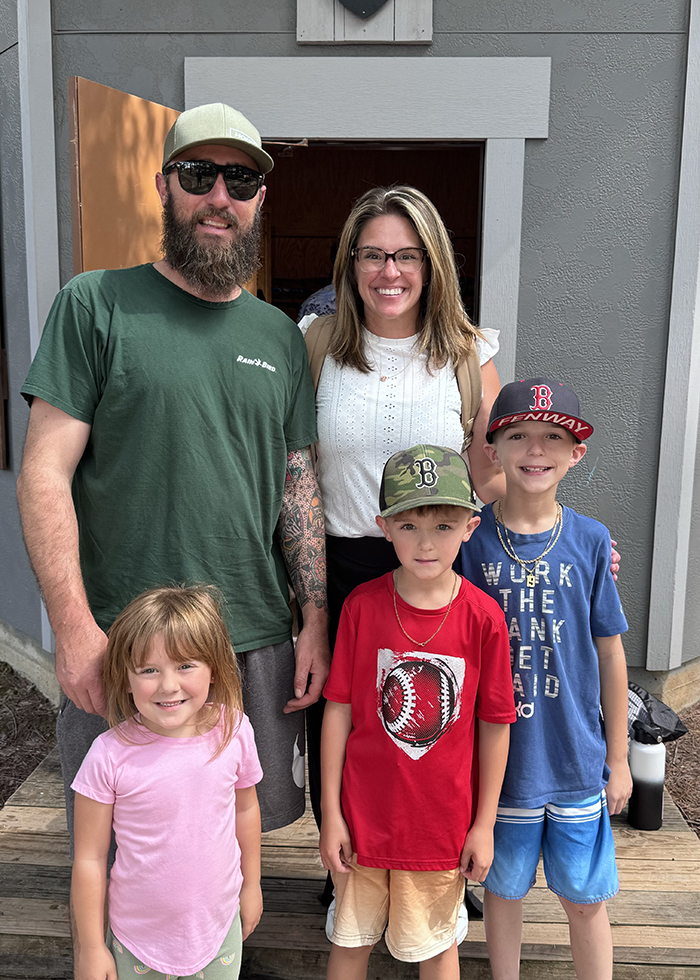
That gave her mission clarity, she said. “I cannot fix everything, but I can step into the gap and help where I can—one student at a time. I also cannot help but believe that if more support were available when kids are struggling, we would see fewer adults trying to carry childhood trauma and insecurities alone later on.”
Kenline’s essay began with “As a future school counselor on a K-12 campus, I believe one of the most meaningful roles we can play is helping students navigate the personal and social issues that quietly shape their school experience.”
Kenline said a key to her writing success was to “write what I know and see, keeping it grounded in the real world. Her favorite part was where she described “how the same underlying needs manifest differently across ages – and how counselors can tailor support to development.”
“My essay focused on what I believe is one of the most important roles of a K–12 school counselor: helping students navigate the personal and social issues that quietly shape their school experience. Specifically, I wrote about how screens and technology are affecting students’ emotional regulation, attention, sleep, confidence, and resilience across all age levels,” she said.
She has witnessed how, when a child is emotionally or socially overwhelmed, learning can be blocked, no matter how strong the instruction is.”
She believes not only she, but other counselors, will make a difference.
“I am passionate about this topic because I see it daily, and I believe counselors are in a unique position to help students build healthier digital habits, develop coping strategies, and feel safe and supported as whole people,” Kenline said.
Her essay wasn’t about winning a contest so much as laying out her personal mission to help students build healthier habits for learning and for life.
Related Posts
Education
General
Arts and Humanities
Culture and Society
Museum embracing educational mission, community outreach

Student Life
Business and Government
General
Science and Technology
Education
Fall 2025 Honor Roll
Education
Business and Government
Student Life
General
Science and Technology